
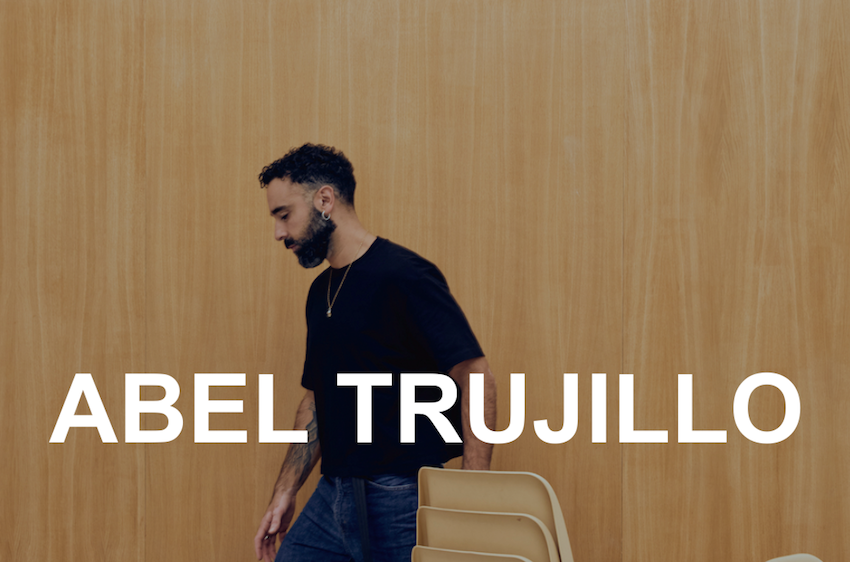
Conversation with Abel Trujillo: Between Photographing Locations and Building Stories
At Locationow, we understand spaces as more than just settings: they are the starting point of a story. Every location brings identity, atmosphere, and its own narrative, transforming the final outcome of an image.
In this edition, we speak with Abel Trujillo, a photographer and art director whose work moves between fashion, interiors, and documentary storytelling. Throughout his career, he has collaborated with brands such as Dior, Cartier, Chanel, and Givenchy, developing a visual perspective deeply connected to the spaces he photographs.
His work has been featured in publications such as GQ Portugal, Elle México, and Numéro Netherlands. After spending a year living in Aruba and working across Europe and Latin America, his perspective has evolved toward a more intimate exploration of interiors, architecture, and documentary photography — a new chapter that will also be reflected in his upcoming work for Condé Nast Traveler.
Your work moves between photography and art direction. How did it all begin, and when did you feel you had found your own visual language?
Photography came into my life many years ago in a very natural way, although it was always accompanied by a lot of hard work. From the beginning, I have balanced commissioned projects with personal work, and it has really been those personal projects that allowed me to build my own visual language.
I would say that over the last five or six years, I’ve started to feel freer when telling stories. That was when I realized photography could communicate moods and emotions. That’s where everything started to make sense: in the way I work with color and in how I choose and interpret locations.
Over time, spaces have gained more and more importance in my work, eventually becoming an essential part of what I want to communicate.
You’ve worked with major international brands. What have these projects taught you creatively and in terms of production?
More than theoretical lessons, these projects have given me real-life situations where you have to react quickly and trust your eye. Those experiences are what truly toughen you up.
I remember shooting for Cartier at the former British Embassy in Madrid, a disused brutalist building. We had very little time, several photographers needed to shoot the pieces, and while the model was in makeup, I had to find locations within the space in barely thirty minutes. Some of the jewelry pieces could only stay on the model for ten or fifteen minutes. That’s when you understand that creativity is also about making fast and precise decisions.
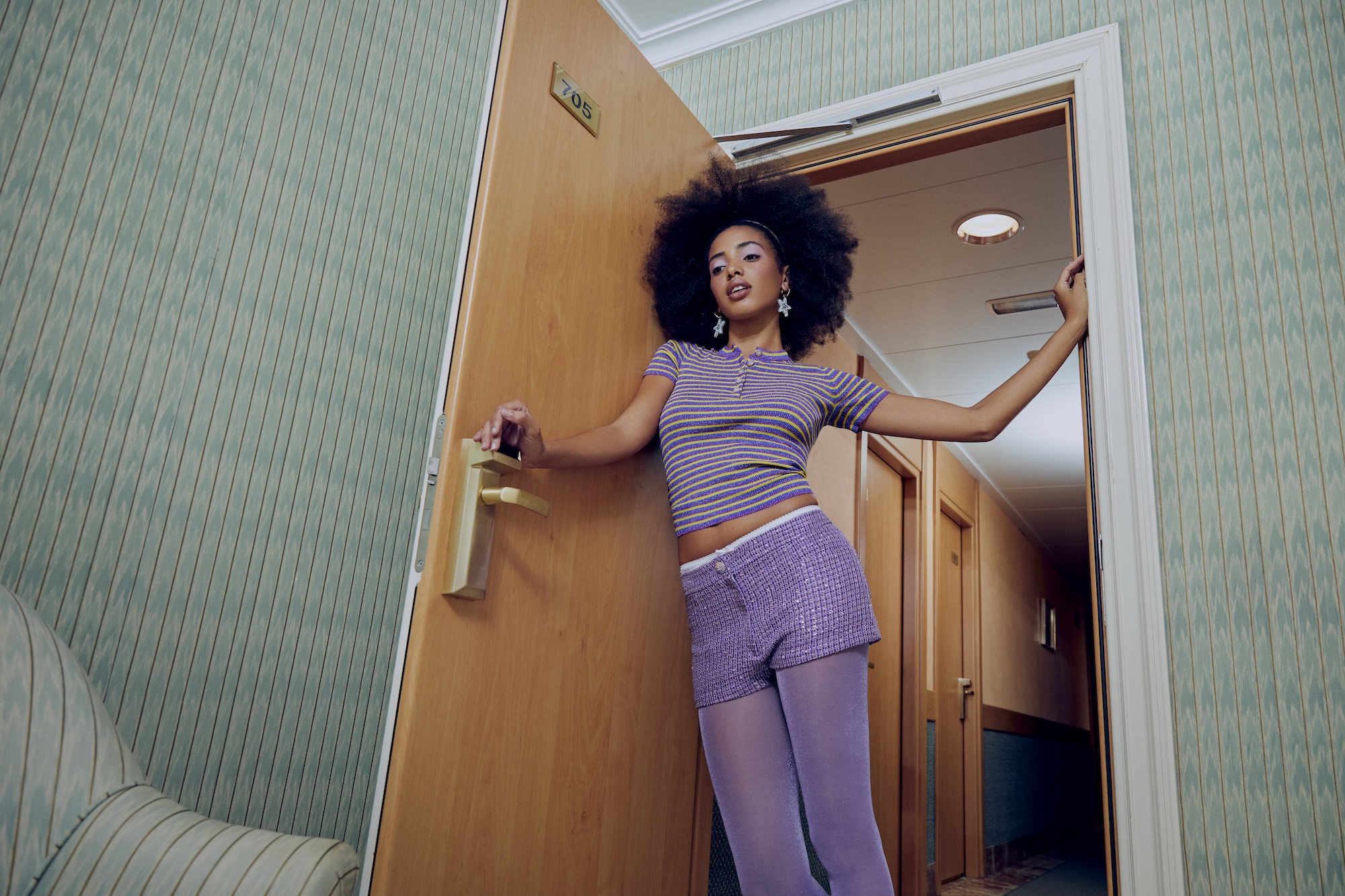
In other cases, the process almost builds itself. For example, during the shoot for Elle México with Dior’s Cruise 2023 collection in Seville, photographing Miriam Saiz at Hotel Casas de la Judería. The location had to align perfectly with the collection’s aesthetic, and the hotel — which felt frozen in time — was a perfect match. Those are the kinds of spaces where you barely need to intervene for the image to work. Thankfully, because I was the only person who hadn’t stayed out partying at Dior’s event in Plaza de España the night before.
Much of your work takes place indoors. What draws you to interiors compared to other environments?
For me, interiors allow me to go one step further when telling stories. Very often, I find the space first, and from there I build the entire concept and storytelling.
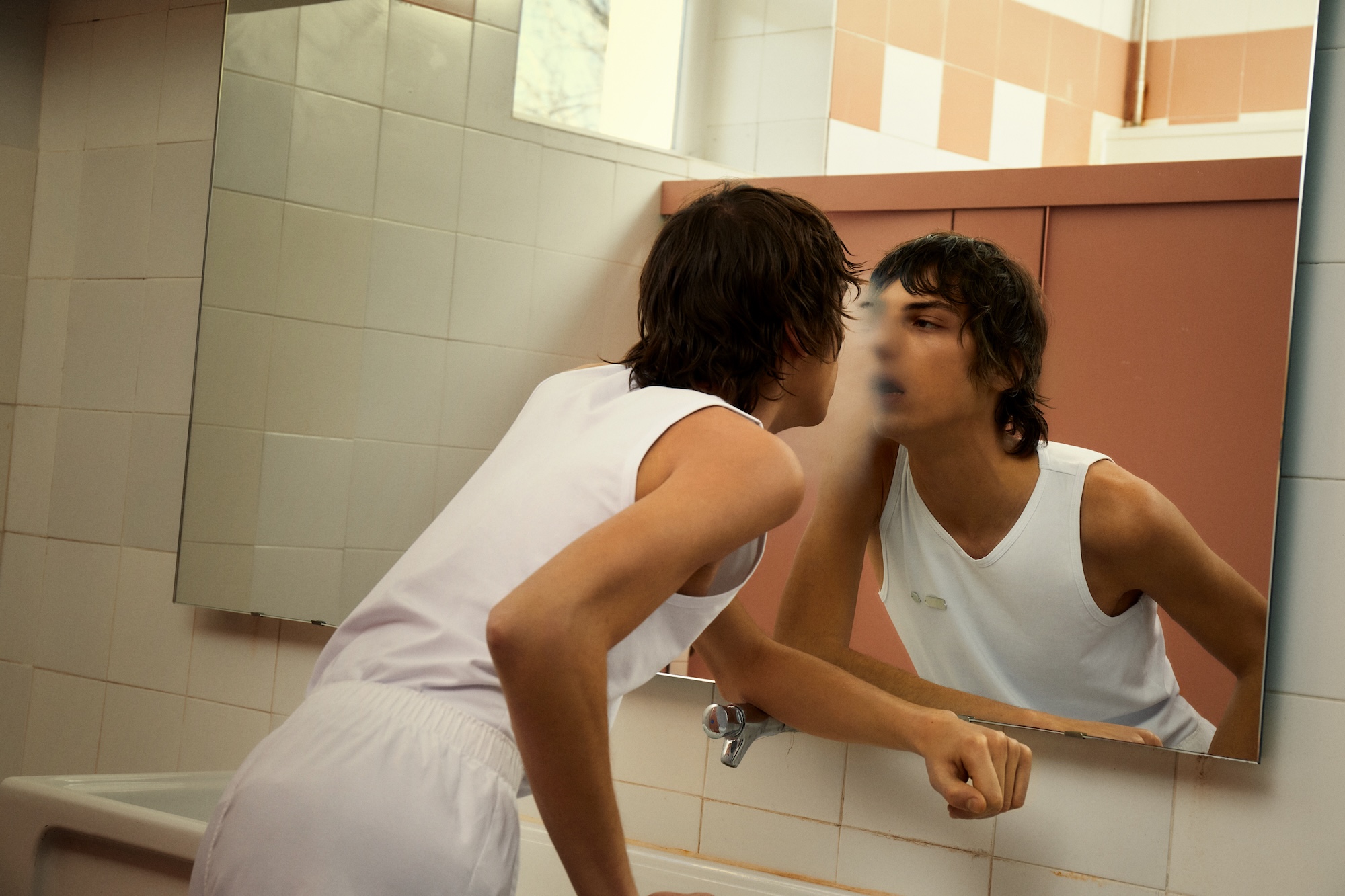
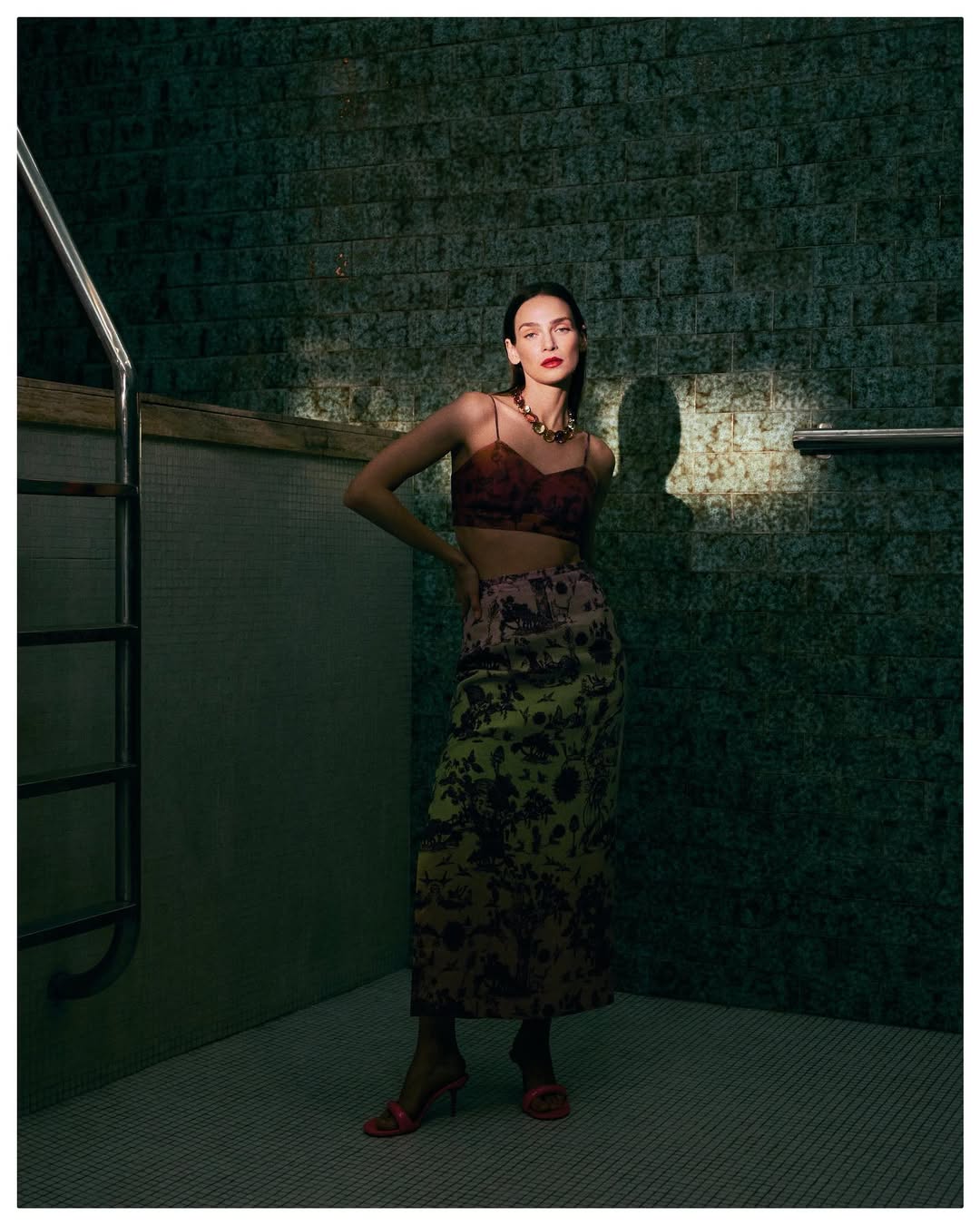
That happened, for example, with the editorial O Templo do Corpo for GQ Portugal, when I discovered Banys La Pista. It was one of those places that already contained its own narrative.
I’m attracted to the sense of intimacy that interiors provide. They allow me to develop a scene more calmly, pay attention to details, and create an atmosphere where the whole team feels comfortable — something I consider essential in any production.
This goes back to the beginning, when I was shooting editorials with almost no budget and felt a huge responsibility toward the people who trusted me and woke up early to help. Over time, I’ve understood that this also becomes part of the image: how the space is built, how the team feels, and how all of that ultimately shows up in the photograph.
When choosing a location, what criteria are most important to you? Are you looking for something emotional, aesthetic, narrative…?
As I mentioned before, I’m very interested in discovering new locations, but I don’t look at them only from an aesthetic point of view. For me, it’s essential that a space has identity, that it makes me imagine a story even before anything happens there.
That happened to me a lot this past year while traveling through Latin America and living in Aruba, where I found incredibly powerful spaces that, due to production limitations, I couldn’t always develop into editorials. Even so, those locations stay with me — they become part of my personal archive.
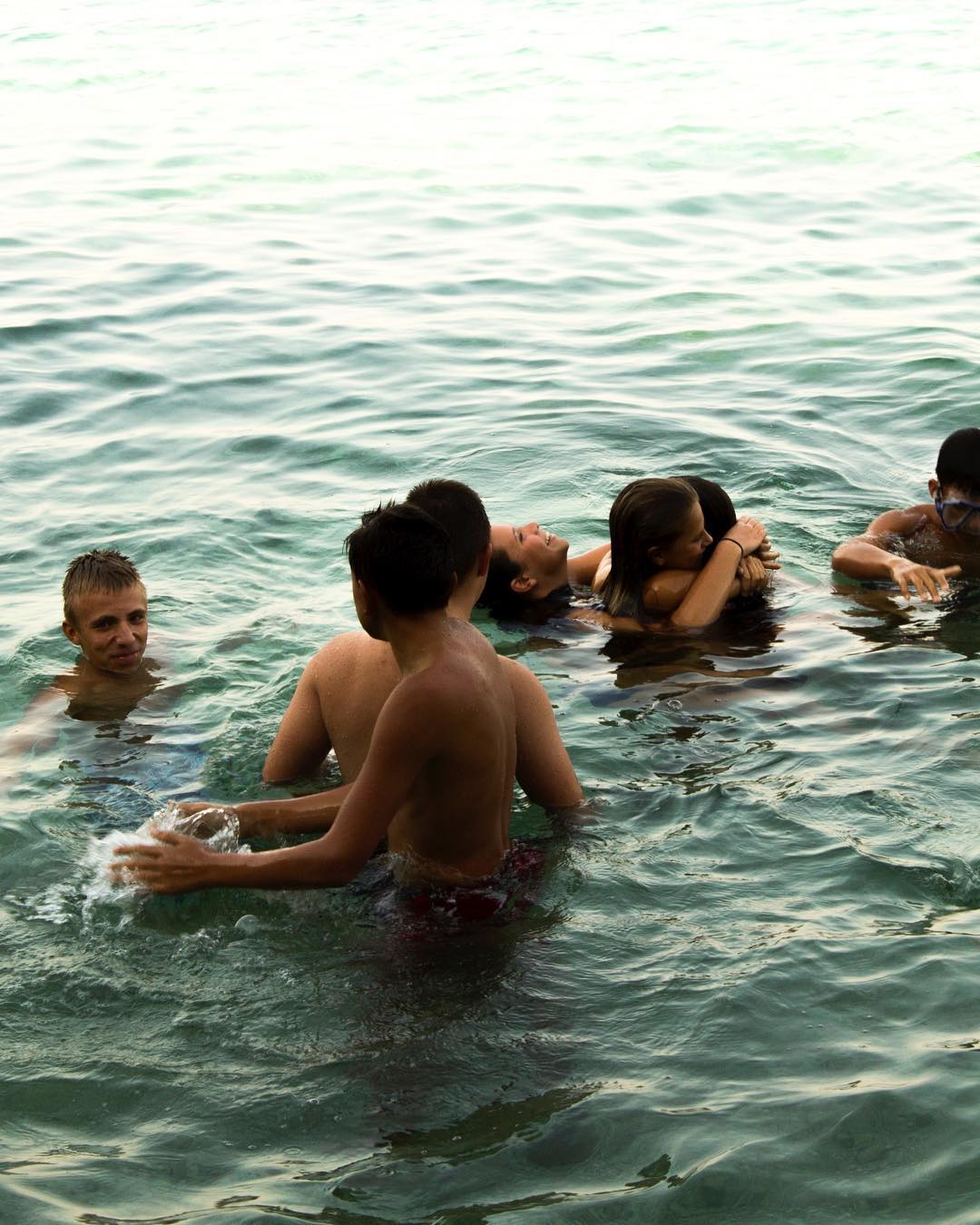
That’s also where the idea came from to photograph Aruba from another perspective: its people, its homes, its daily life. That led to a photo documentary capturing my year living on the island, which will be published in June 2026 in Condé Nast Traveler.
Is there any location you remember as especially meaningful or inspiring?
The building next to the baths in Badalona that I photographed for GQ Portugal completely blew my mind. Or the Laboral University of Tarragona. That dining hall is impossible to forget and, over time, it has become part of one of my most memorable projects — a beautiful story for DSECTION, Dreamers Vol.01.
That’s something Barcelona has: a respect for places, architecture, and constructions that know how to coexist with the present.
Is there any anecdote from a shoot that changed the way you work?
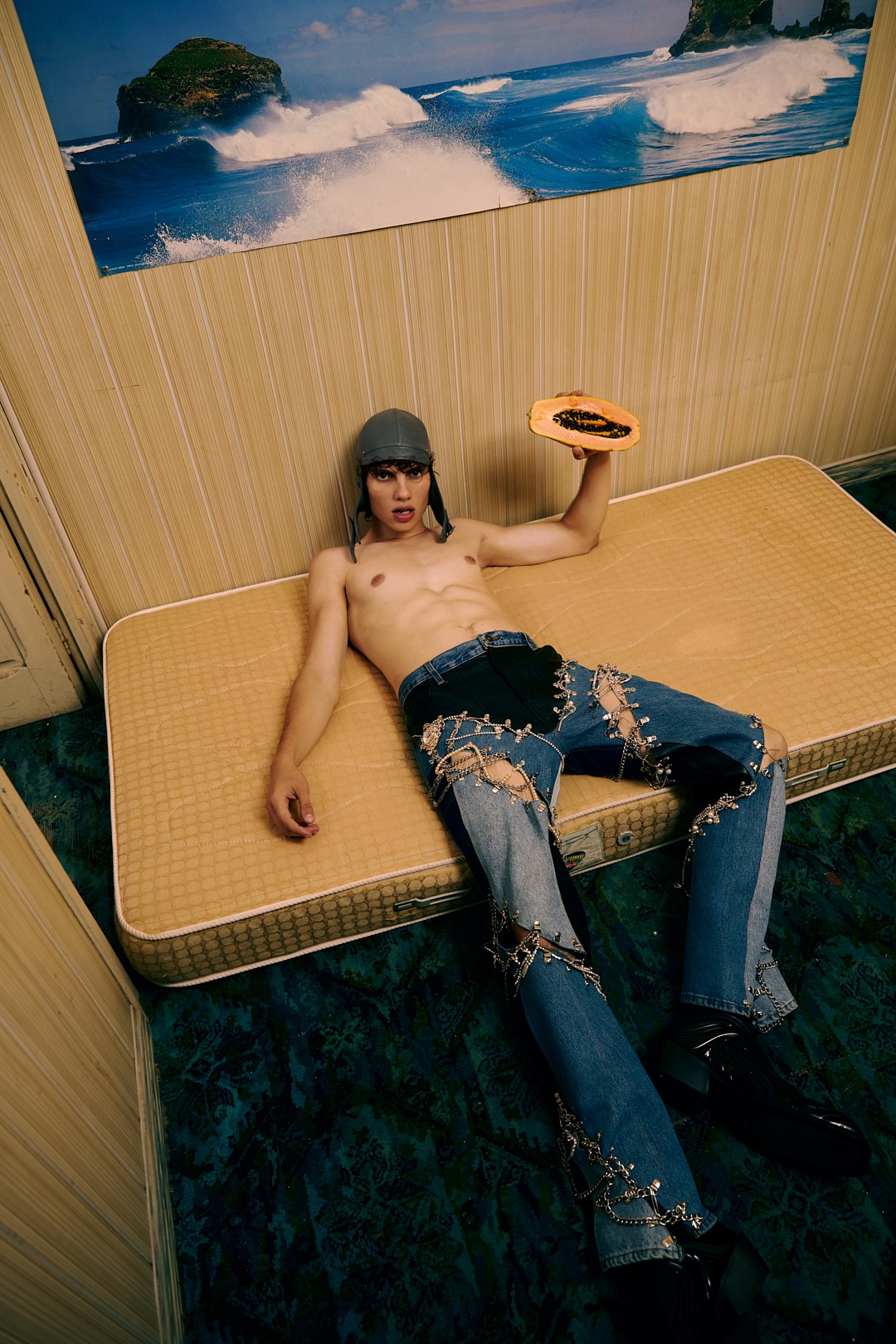
For the editorial Nomadland, we were shooting at a wonderful campsite on the Catalan coast, with a very nineties aesthetic and views I had dreamed of. I had Frances McDormand’s film very much in mind and wanted to create a tribute to that atmosphere in an editorial.
It was one of those shoots that felt like those dreams where you want to run but can barely move. At that time, I was still inexperienced when it came to not taking on responsibilities that weren’t mine. I kept thinking: “How did I get myself into this?” But the magic came afterward.
I ended up taking what is, for me, one of the most beautiful and unexpected photographs I’ve ever made.
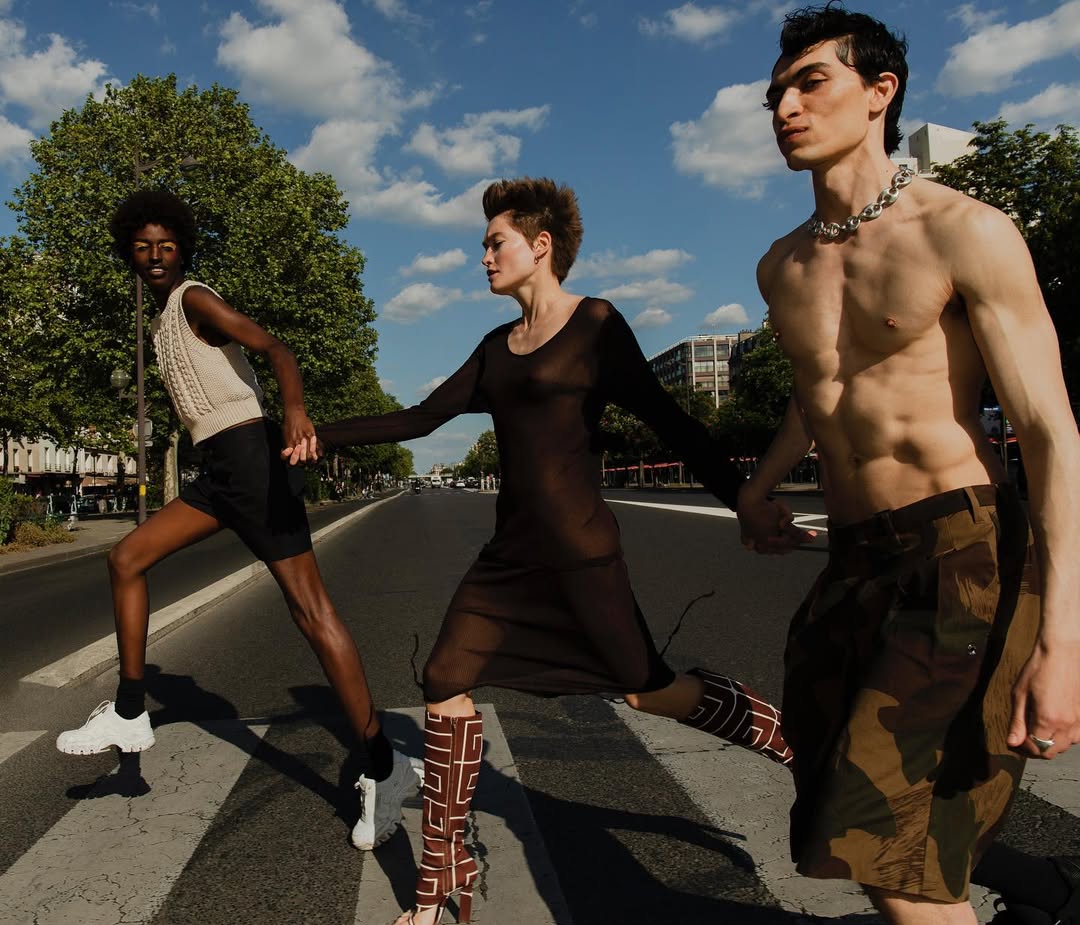
It was the last setup of the day, with the final looks. The two models were waiting for the third girl while she was changing. It was freezing cold, and they were covered with two coats that had actually been rejected from the styling selection — one from Palomo Spain and one from LANVIN. I took a test shot where you could even see a flash umbrella in the frame. That image ended up opening the issue in a double-page spread in the print edition of GQ Portugal.
You’ve spent time living in Aruba and working throughout Latin America. How has this changed the way you see and work?
Aruba has given me many things, but above all it brought me back to a kind of photography I truly love and had already explored years ago: interiors and documentary photography — taking photographs simply because I want to, without models, brands, or fashion magazines.
Even before fashion, my home was always filled with magazines about interiors, architecture, and design. Being in this part of the world led me to work throughout Latin America over the past year and to develop Noya Studio, my interiors and hospitality photography practice, where I’ve also been able to grow creatively as an art director.
That doesn’t mean I’ll stop working in fashion — quite the opposite. But I felt something was missing, which is why I was so excited to do this interview with you. I want everything to move in this direction. I love combining fashion and interior design. Everything adds up.
What differences do you find between working in Europe and Latin America, especially in terms of locations and visual culture?
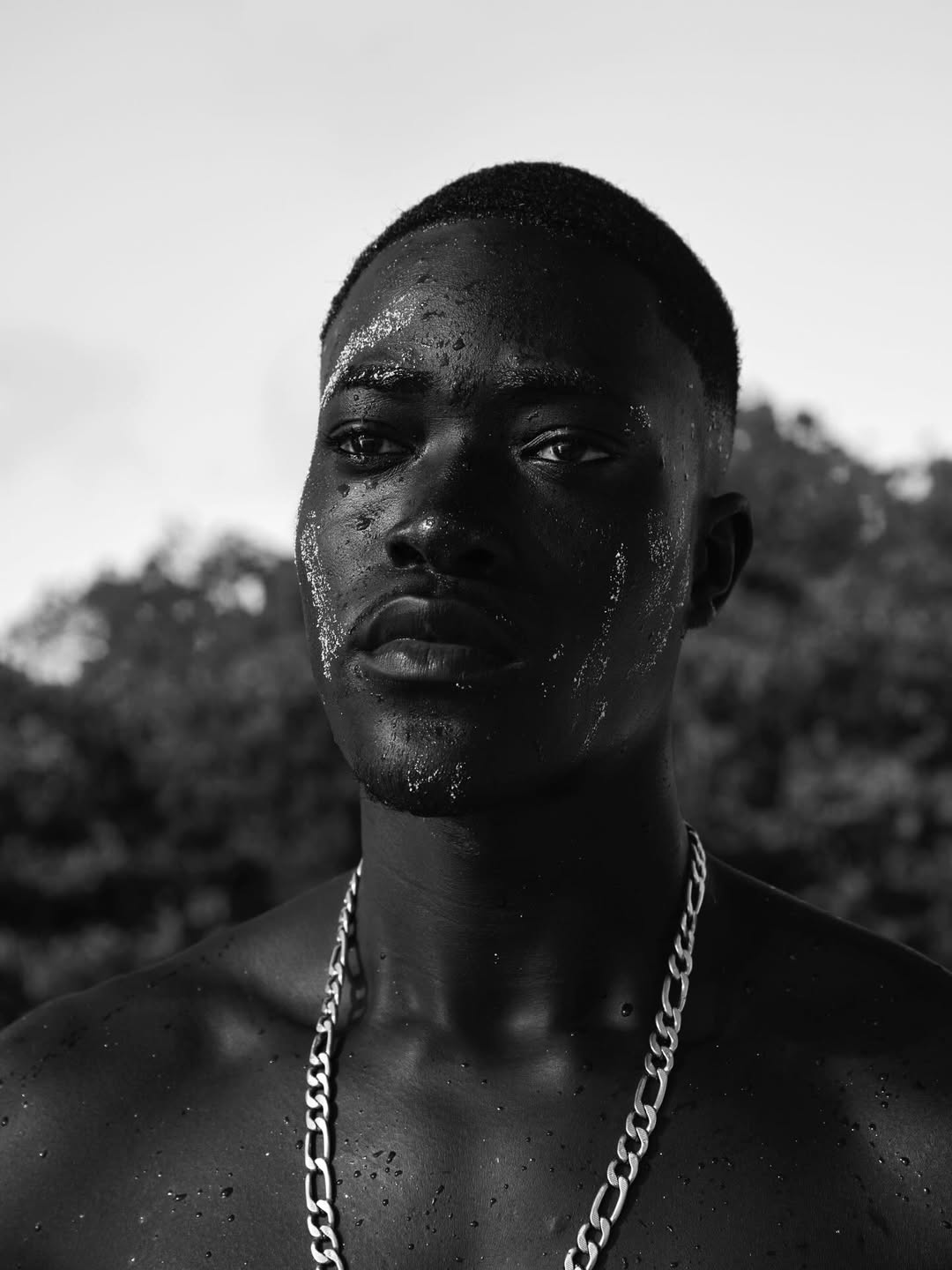
Visually, it’s completely different. For someone like me, who loves photographing color, this is paradise.
I especially connect with the Dominican Republic, Costa Rica, and Colombia, and with the aesthetic that is now being shown to the world thanks to artists like Bad Bunny and Karol G. What happens in the streets, the way people live in such a collective and communal way… When I return to my base in Madrid, I know I’ll miss all of this deeply. I feel as though I’ve been drinking from a completely different source of creativity. I’m creatively overwhelmed in the best possible way — I need to pause and let everything settle. I’m eager to create, with many ideas both in fashion and interiors, but I need to rest my eyes and look at it all from a distance.
What still excites you about your work today?
I’m happy with my work. The recognition I feel for my career doesn’t only come from outside — it also comes from within. I’m very proud of how I’ve reached this moment and of seeing how the pieces are slowly aligning, you know? To look at my published work and see quality rather than quantity. To realize that taking things step by step really does pay off.
If you had to define your relationship with spaces in one sentence, what would it be?
Without sounding too romantic, I’m always searching for the perfect location for the story I want to tell.
More and more, space carries enormous weight in my work — and I love that it does.
At Locationow, we provide locations for editorial photo shoots, film productions, commercials, music videos, and branded content. Locationow specializes in everything needed for your location production. We work as fixers and location managers, offering tailor-made services for productions of any scale and budget.
Discover more content like this on our blog and follow us on social media.